
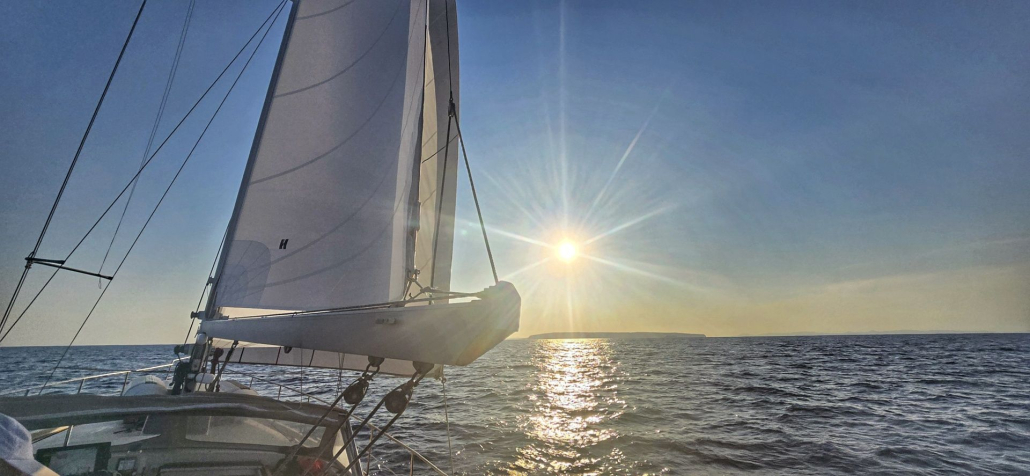
Tapas, Furler Troubles: Almerimar to Portocolom
There’s a moment, somewhere between the marina of Almerimar and the sun-soaked shores of Formentera, when everything seems to fall into place, until it quietly doesn’t. This is the story of how a smooth crossing turned into a sunlit series of surprises, including one very stubborn sail.
Leaving Almerimar: On Time for Once
We left the marina in Almerimar in the early afternoon with calm seas and cheerful skies. Bagabonda was in good spirits, and so were we. After a peaceful overnight sail, we arrived in Cartagena by late morning, happy and just a bit sleepy.
Cartagena: A City That Charms on Contact
Cartagena took us by surprise in the best possible way. The marina is right in town, and steps away, you find ancient Roman ruins, tapas bars, museums, and a whole lot of charm. It didn’t take long before we started imagining spending part of the winter there. We might just do it.
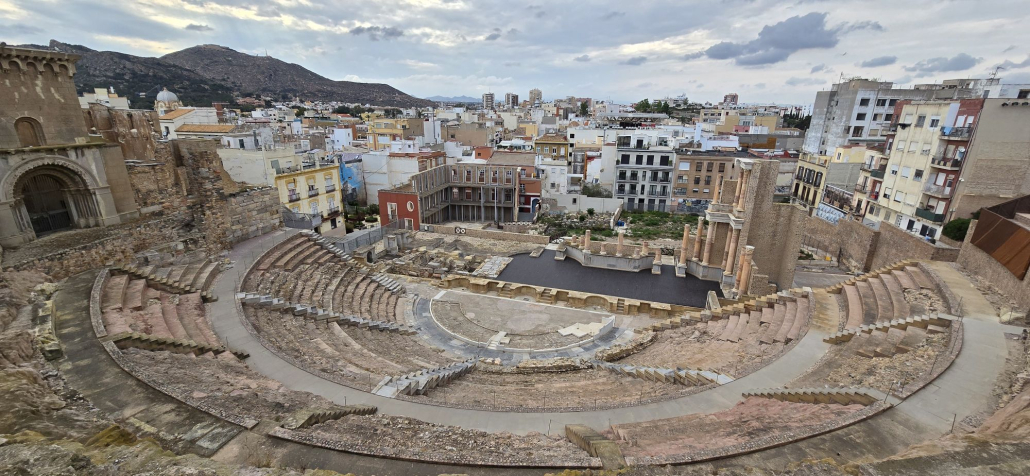
From Plan to Plot Twist
After a few days soaking in Cartagena’s warmth (and its cuisine), we continued our journey toward the Balearic Islands. The plan was simple: sail to Ibiza, enjoy a calm arrival, and continue toward our final destination of Portocolom on Mallorca.
But as we approached Ibiza, something went wrong. The mainsail refused to furl. For those not used to sailing life, on our Amel, the mainsail rolls into the mast when we want to take it in. This time, the furler motor that should roll the sail in the mast jammed and wouldn’t roll back in. We tried using the manual backup system, but it wasn’t working either. And you can’t sail into a busy harbor with a mainsail flapping about like it owns the place.
Formentera: The Surprise Pit Stop
With no better option, we turned slightly south and anchored off a quiet beach in Formentera. There, in the calm turquoise water, we manually brought down the sail and secured it by hand. Not exactly graceful, but it worked.
Getting from Formentera to Ibiza should have been a short hop, but it turned out to be the most stressful leg of the journey. The current was against us the entire way, and the channel was busy — not just with high-speed ferries, but also with countless rental boats driven by people with zero training and zero clue about maritime rules. It felt like dodging a mix of bumper cars and torpedoes. By the time we reached Ibiza, we were salty, sweaty, and very ready for a stiff drink.
Dividing to Conquer
With repairs looming and schedules shifting, we decided to split up. Koen stayed on board and continued the final leg solo, anchoring for the night in Ses Salines on the southern coast of Mallorca. Peggy hopped a short flight to Mallorca and waited in Portocolom for Bagabonda’s slightly bruised but determined arrival.
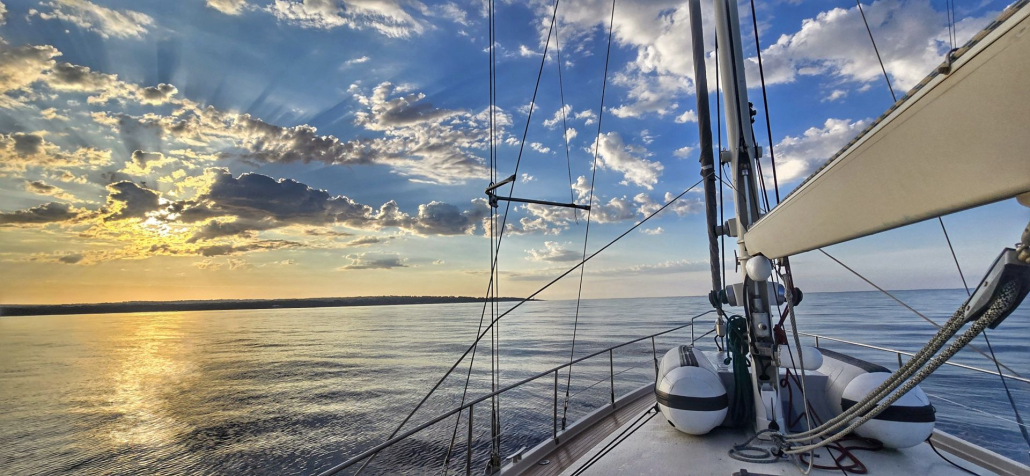
Main Sail Missing on our way to Portocolom
A Birthday, a Breakdown, and a Friend Who Saved the Day
Our stop in Portocolom wasn’t random. A close friend was celebrating his 55th birthday in a stunning Mallorcan setting, and we were lucky enough to be invited. That celebration was the reason we aimed for Portocolom in the first place.
That same friend became absolutely essential in what came next. After we discovered the mainsail motor was truly broken, we had to return briefly to Belgium. While we were away, our friend helped coordinate with local specialists in Mallorca to keep the repair process moving. Without him, we’d probably still be stuck in “To Do” mode.
Amel: Still Supporting Boats Older Than TikTok
One of the best parts of owning an Amel is their incredible support. The boat is from 1990. The problem was with a motor system that old. And yet, in 2025, we contacted Amel and they responded with diagrams, explanations, and parts. It’s rare to find a company that supports their older models so thoroughly. We already liked the brand. Now we love it.
Fixing the Mainsail Furling System: A Journey in Itself
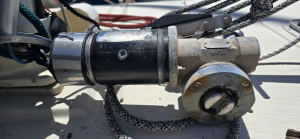
Getting the system working again wasn’t just a matter of swapping a part. We had to remove the entire electric motor and its gearbox. Inside, we found cracked components and worn gears. Some parts came from Amel. Others had to be handmade by a local craftsman.
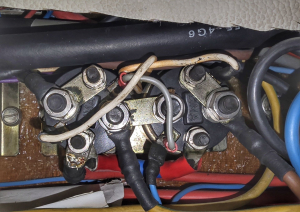
Once we had everything, we reinstalled the system with a simpler and updated two-cable electric connection instead of the original four-cable design. We’ll include the schematic in case other sailors want to do the same.
But of course, the new parts didn’t fit perfectly into the old setup. So we got creative, drilling into the rubber mounts to make everything line up. It took time and patience, but eventually we got there.
The mainsail is now back in action, quietly doing its job and helping Bagabonda chase new horizons. And that feels like a proper ending to this little detour.
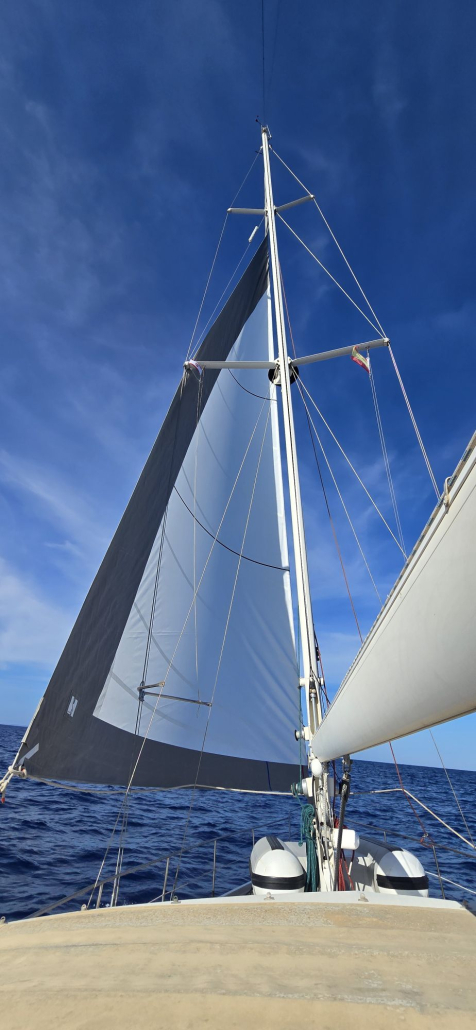
The Nerdy Corner: For Those Who Love the Furler-Details
If you are the type who likes to get into the nuts and bolts, here’s a more detailed breakdown of the repair adventure:
- Step 1: Switching to Manual Mode
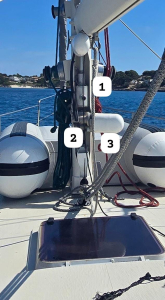
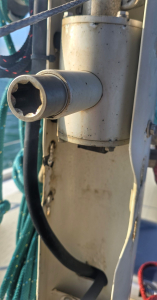
Before anything else, we tried to furl the sail manually. On our Amel, that means loosening four screws inside the mast. This allows the electric motor to drop down slightly, just enough to disengage it from the furling drum. Normally, this would allow us to use a winch to roll in the sail manually. Unfortunately, this fallback also failed. - Step 2: Removing the Motor and Gearbox
Amel really thought ahead. After switching to manual mode, we took it a step further. We removed the four screws entirely, which allowed the motor and gearbox to slide down and out of the mast without any need to dismantle major components. Once we had access, we cut the power cable and carefully removed the motor and gearbox. The manual gearbox, which serves as a backup, was left untouched since Amel no longer supplies replacements and it was not part of the issue. - Step 3: Assessing the Damage
Once opened, the interior confirmed our concerns. Several parts were cracked, and the gears were heavily worn, years of use had done their damage. The gearbox was beyond repair, and some components were no longer functional. - Step 4: Finding and Rebuilding Parts
We contacted Amel and were relieved to find that they still had several of the original parts in stock. For the ones they could no longer supply, a skilled local craftsman in Mallorca reproduced them based on the original specifications. - Step 5: Adapting to the New Electrical System
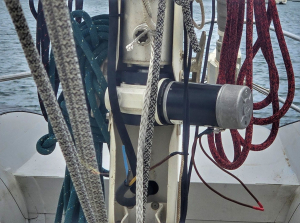
The new motors only support a two-cable system, so we had no choice but to adapt. This required changes not just in the cabling but also in how the relay connects to the motor. The relay is located in the forward section of the boat. Thanks to the schematic provided by Amel, connecting the wires was reasonably straightforward.During inspection, we found that the brown power cable to the original 12V motor had degraded from decades of use and overheating. We replaced it by using the two most robust cables remaining. In my eagerness, I accidentally cut the ground wire too early, which delayed the process but gave me a quick and valuable lesson in 12V logic. - Step 6: Fitting the New Assembly
The new parts did not line up perfectly with the original setup. We had to carefully drill the rubber mounting blocks so the assembly could sit securely and function properly. - Final Result
The mainsail is once again fully functional, furling in and out smoothly. Bagabonda feels like herself again. The manual backup system still needs some attention, but that will be a project for another day when we feel ready for another round of mast mechanics. And it makes for another nice upgrade to our Amel Santorin!


 Koen Blanquart

